The “Pregnancy Robot” Hoax and the Real Story of Artificial Placentas
- matei cosmin
- Sep 23, 2025
- 4 min read

Not long ago the internet convinced itself that China had created a pregnancy robot. A machine with sleek pods and robotic arms where babies were supposedly growing like tiny astronauts in futuristic incubators. People shared the images with a mixture of horror and fascination. The subtext was clear. The future had arrived. Mothers might be obsolete. Reproduction had finally been outsourced to machines.
And yet none of it was real. The images were AI generated fakes. There is no working pregnancy robot in China or anywhere else. Live Science and other outlets quickly debunked the story. But the fact that it went viral tells us something important about the way we imagine technology. When it comes to the idea of an artificial womb we flip almost instantly from complete ignorance to science fiction dystopia.
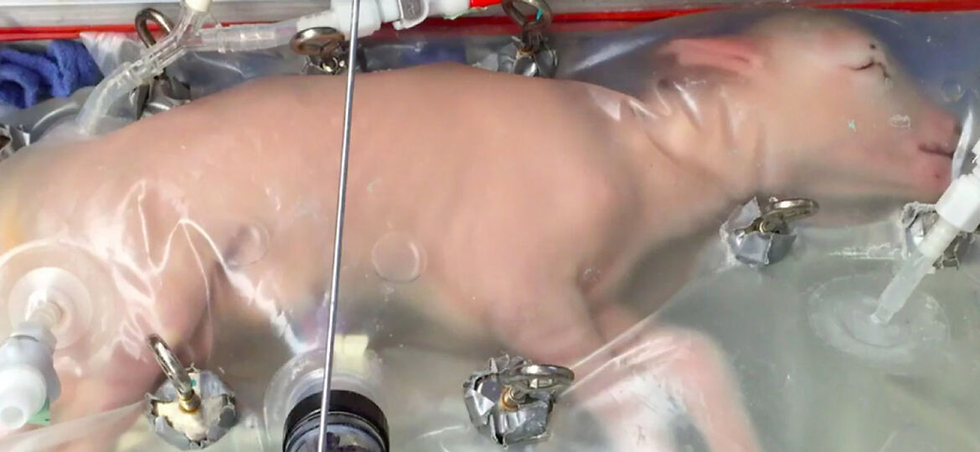
The truth is both less dramatic and far more meaningful. Scientists really are working on artificial placentas and artificial womb systems but they are nothing like the viral images. They do not involve shiny pods or robotic arms cradling embryos. They involve fluid filled bags tubes cannulas and fragile umbilical vessels that spasm at the slightest provocation. They involve teams of researchers standing in lab coats staring at monitors trying to keep a lamb alive outside its mother for a few extra weeks.
And that difference matters. Because the real story of ectogestation is not about replacing pregnancy. It is about saving the lives of the smallest and most vulnerable babies.

Imagine being born at 22 weeks. Your lungs are unfinished. They collapse when you try to breathe. Your brain bleeds easily. Your immune system barely exists. Neonatal intensive care can provide oxygen warmth and nutrition but it cannot mimic the womb. Even the most advanced incubator is still just a box with heaters and wires. It is not a womb.
That is the brutal mismatch artificial placenta research is trying to fix. The gap between what an infant’s body is ready for and what the world forces upon it. According to the World Health Organization about one in ten babies is born prematurely. Nearly a million die each year from related complications. At 22 weeks survival in advanced countries is maybe thirty percent. At 23 weeks the odds nearly double. One extra week can mean the difference between death and a fighting chance. That week is what researchers are trying to buy with artificial womb technology.
The real systems are as fascinating as they are unglamorous. In Philadelphia scientists built what they called the Biobag. A clear plastic sack filled with synthetic amniotic fluid. Inside it fetal lambs floated while their hearts pumped blood through a low resistance oxygenator that acted as a placenta. They lived for nearly a month. Their lungs and brains kept maturing. In Japan researchers built the EVE platform. It could keep lambs alive for one to two weeks using similar principles. In Europe the Perinatal Life Support project is working on a roadmap for eventual human trials.
But even in these success stories the limits are obvious. Cannulating tiny umbilical vessels is notoriously hard. The blood reacts badly to artificial tubing clotting or breaking down in ways that threaten survival. Infection looms over every day of support. And no system comes close to replicating the full biochemical orchestra of the natural placenta. Hormones immune signaling micronutrient balancing these remain beyond our reach.
Which is why the viral story of a pregnancy robot is so misleading. The truth is messy. Progress comes in weeks of keeping a lamb alive not in glossy AI renderings of glowing pods.
There is also another layer. Artificial intelligence. Not because AI can grow babies but because it might help manage the data overload that comes with keeping a premature infant alive outside the womb. Current systems require constant manual adjustments by research teams. Oxygenation levels. Blood pressure. Nutrient composition. AI could eventually predict instability before it happens adjusting oxygen or flow rates more precisely than human hands. In that sense AI is not gestating babies. It is more like a nervous system for the machines that are already being built. A partner not a parent.
And then of course there are the ethical questions. What happens if artificial placentas succeed. Do we redefine viability. Does abortion law change. Who gets access. Will this be a technology only for wealthy hospitals or will it reach the millions of families who need it most. These questions are harder than the engineering. They involve politics law and social values as much as medicine.
But the most important thing to keep in mind is this. Artificial wombs are not about science fiction scenarios where human reproduction becomes mechanical. They are about the very real problem of extreme prematurity. They are about the one million babies who die every year because they are born too soon. They are about the difference between twenty two and twenty three weeks. They are about fluid filled bags tubes and the stubborn belief that maybe science can give those infants a little more time.
So yes the pregnancy robot from China was fake. But the hope it distorted is real. In quiet labs in Philadelphia Tokyo and Utrecht researchers are building systems that might one day let a baby born impossibly early float safely in a protective bath while its lungs and brain catch up. It does not look like science fiction. It looks like medicine at its most fragile and most ambitious.
And that is a story far more interesting than any hoax.


Comments